Free tool
Protein calculator
How much protein you need each day and at each meal, from your weight and goal. Takes 10 seconds.
Your protein target
What g of protein looks like: 100 g cooked chicken breast ≈ 31 g · 200 g Greek yogurt ≈ 20 g · 150 g firm tofu ≈ 25 g · 1 cup cooked lentils ≈ 18 g · 3 eggs ≈ 18 g.
Get the free High-Protein Grocery List
A printable high-protein shopping list, plus the free 7-Day Kickstart plan. Sent to your inbox now.
Hit your number without thinking about it
Guide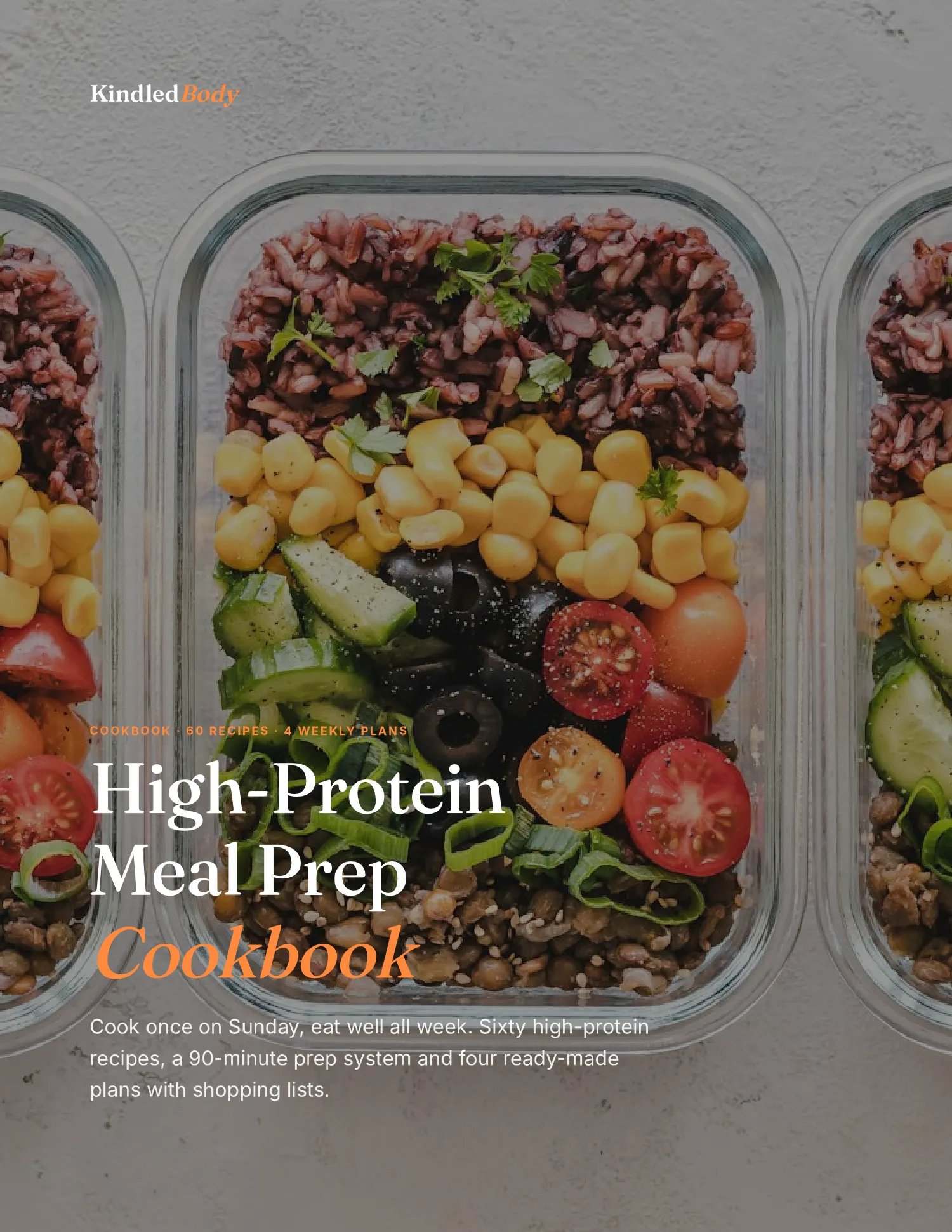
High-Protein Meal Prep Cookbook
60 recipes and a weekly prep system.
$24How it works
- Building muscle: 1.6 g per kg of bodyweight a day. In a meta-analysis of 49 trials, gains from extra protein levelled off around this point (the upper estimate was about 2.2 g/kg).
- Losing fat while training: 2 g/kg, the top of the 1.4–2.0 g/kg range the International Society of Sports Nutrition recommends for active people, because more protein helps keep muscle when you eat less.
- Little exercise: 0.8 g/kg, the standard adult recommendation.
- Per meal: your daily total split evenly. Even spacing matters: 20 g every 3 hours beat the same total eaten in 2 large or 8 small servings for muscle building after exercise.
If you carry a lot of body fat, use a goal weight instead of your current weight, or use the calorie & macro calculator with your body-fat %. Not for pregnancy, breastfeeding, under-18s, or kidney disease or other medical conditions: ask your doctor or a registered dietitian.
Common questions
How much protein do I need to build muscle?
About 1.6 g per kg of bodyweight a day (0.73 g per lb). A large meta-analysis found the extra muscle from more protein levelled off around that point; up to about 2.2 g/kg is a reasonable upper end.
How much protein do I need if I don't exercise?
The standard adult recommendation is 0.8 g per kg of bodyweight a day (0.36 g per lb). That covers basic needs; people who strength train benefit from more.
Should I eat more protein when losing weight?
If you are training while eating less, aiming higher (around 2 g/kg) helps you keep muscle while you lose fat.
How much protein should I eat per meal?
Spread it across 3–5 meals. In one study, 20 g every 3 hours built more muscle protein than the same total in 2 big or 8 small servings. For most adults that means roughly 20–40 g a meal.
Is too much protein bad for you?
For healthy adults, intakes up to about 2 g/kg are well studied and considered safe. If you have kidney disease or another medical condition, ask your doctor before increasing protein.
Next: How much protein do you need? The full guide · Calorie & macro calculator · Free nutrition tracker
Sources
- Morton RW et al. (2018). A systematic review, meta-analysis and meta-regression of the effect of protein supplementation on resistance training-induced gains in muscle mass and strength. British Journal of Sports Medicine. doi:10.1136/bjsports-2017-097608
- Jäger R et al. (2017). International Society of Sports Nutrition Position Stand: protein and exercise. Journal of the International Society of Sports Nutrition. doi:10.1186/s12970-017-0177-8
- Areta JL et al. (2013). Timing and distribution of protein ingestion during prolonged recovery from resistance exercise alters myofibrillar protein synthesis. The Journal of Physiology. doi:10.1113/jphysiol.2012.244897