Workout Plans
Beginner Gym Workout Plan: Your First 4 Weeks
October 11, 2026 · 5 min read · Training
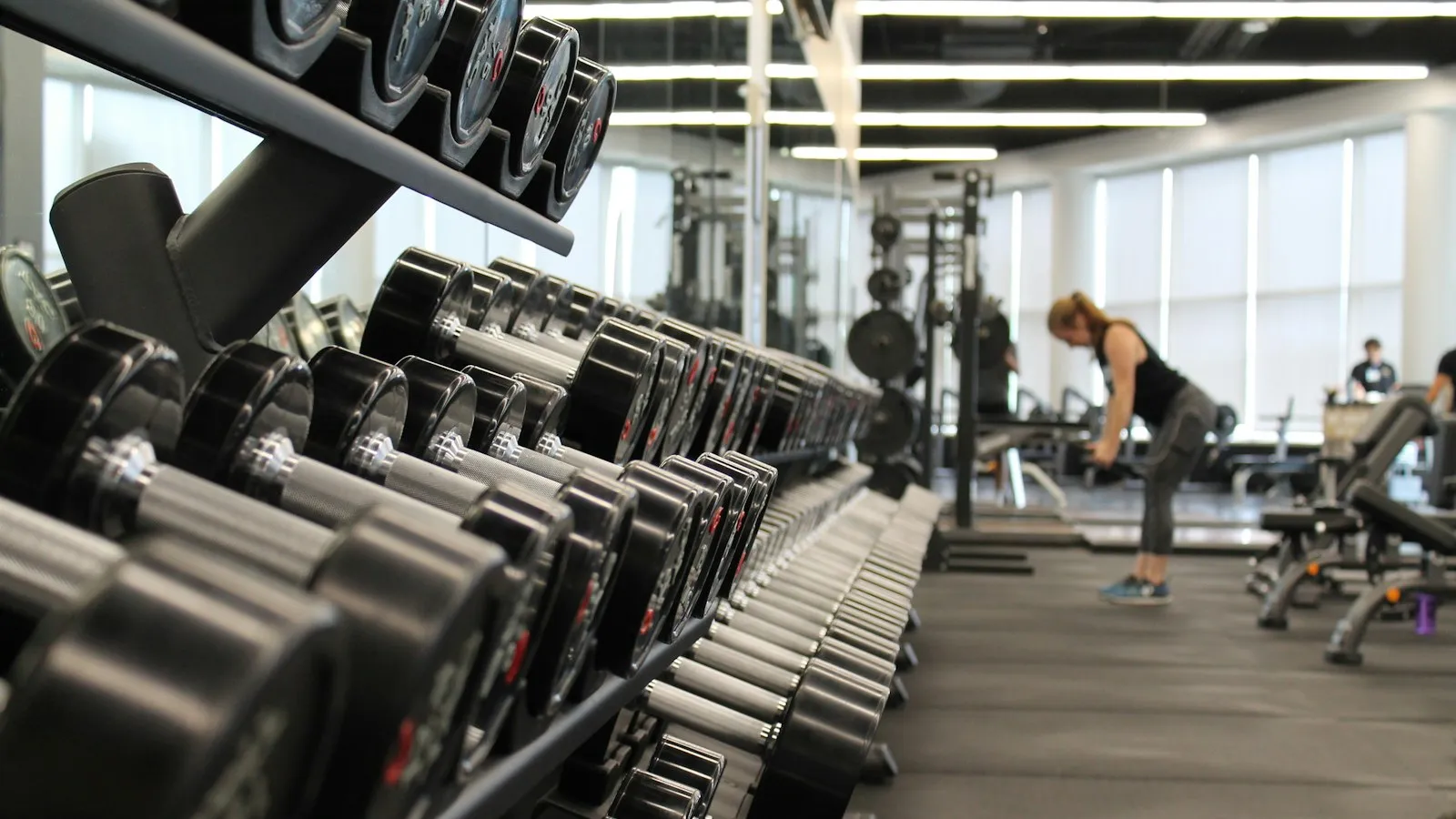
Walking into a gym for the first time is the hardest part. The second hardest is knowing what to do once you’re there. This plan removes the guesswork: three full-body sessions a week, eight simple exercises, and a clear way to make each week a little harder than the last.
Why this plan works
Four research findings shape it:
WHO (2020); Schoenfeld et al. (2016)
- The World Health Organization recommends muscle-strengthening activity on two or more days a week for adults. Three days gives you a buffer for missed sessions.
- Frequency: a meta-analysis by Schoenfeld and colleagues found that training each muscle group at least twice a week produced more muscle growth than once a week. Full-body sessions hit every muscle three times.
- Volume: more weekly sets lead to more growth, in a dose-response way. Beginners grow well on modest volume, so this plan starts low and adds sets gradually.
- Load: lighter and heavier weights build similar muscle when sets are taken close to failure, but heavier loads build more strength. Moderate reps (8–12) give you a bit of both while you learn the movements.
The two workouts
Alternate A and B: for example A on Monday, B on Wednesday, A on Friday, then B, A, B the next week.
Workout A
| Exercise | Sets × reps | Rest |
|---|---|---|
| Leg press | 2–3 × 10–12 | 2–3 min |
| Machine chest press (or dumbbell bench press) | 2–3 × 8–12 | 2–3 min |
| Lat pulldown | 2–3 × 10–12 | 2 min |
| Dumbbell Romanian deadlift | 2 × 10–12 | 2 min |
| Plank | 2–3 × 20–30 s | 1 min |
Workout B
| Exercise | Sets × reps | Rest |
|---|---|---|
| Goblet squat | 2–3 × 8–12 | 2–3 min |
| Seated cable row | 2–3 × 10–12 | 2 min |
| Dumbbell shoulder press (seated) | 2 × 8–12 | 2 min |
| Glute bridge or hip thrust | 2–3 × 10–12 | 2 min |
| Dead bug | 2 × 8 each side | 1 min |
Start every session with 5 minutes of easy cardio, then one or two light warm-up sets of the first exercise. Our warm-up guide explains why.
Weeks 1–4: how to progress
| Week | Sets per exercise | Effort | Focus |
|---|---|---|---|
| 1 | 2 | Stop with 3–4 reps left in the tank | Learn the movements and machine settings |
| 2 | 2 | Stop with 2–3 reps left | Add weight when you hit the top of the rep range |
| 3 | 3 on the first three exercises | Stop with 2–3 reps left | Same weights, one extra set |
| 4 | 3 | Stop with 1–2 reps left | Beat last week by one rep or a little weight |
The rule that makes you stronger: when you can do every set at the top of the rep range (say 3 × 12) with good form, add the smallest weight increase available next session and drop back to the bottom of the range. This is progressive overload, and it’s the engine of every good program.
Write it down. A notes app is fine; see how to track your workouts.
How long should I rest?
Use the times in the tables. In a study of trained men, resting 3 minutes between sets led to greater strength gains than resting 1 minute, because you can lift more on each set. On small exercises like the plank, a minute is plenty. See how long to rest between sets for the detail.
Common beginner mistakes
- Doing too much in week one. Soreness that stops you coming back costs more than a slow start.
- Chasing weight over form. Move through a full, controlled range. If the weight forces you to cut the movement short, it’s too heavy. Our squat form guide covers the most common fixes.
- Changing the plan every week. Progress comes from repeating the same exercises and slowly adding weight.
- Skipping food and sleep. Muscle is built between sessions. Eat enough protein (use the protein calculator) and aim for 7+ hours of sleep.
What comes after week 4?
Keep running the same plan as long as you’re adding weight or reps most weeks. When progress stalls, it’s time for a structured program that changes the volume and intensity in phases. The 12-Week Gym Strength Foundations program picks up exactly where this plan ends, with every session laid out and printable logs.
FAQ
I’m nervous about the free-weights area. Can I use only machines? Yes. Machines are a great way to start: they guide the movement and are easy to adjust. Swap the goblet squat for a second leg press and the dumbbell exercises for their machine versions.
Should I do cardio too? Yes, on separate days or after lifting. Walking counts. Lifting first keeps your strength work fresh.
How heavy should I start? Light enough that the last rep of each set is slow but clean. It’s normal to add weight quickly in the first few weeks.
I’m over 50 / have an injury. Is this plan for me? The structure suits most healthy adults. If you have a medical condition, an injury or haven’t exercised in years, check with your doctor or a physiotherapist first.
The bottom line
- Train three days a week, full body, alternating two workouts.
- Start with 2 sets of 8–12 reps, rest 2–3 minutes on big lifts, and add a set in week 3.
- Add weight whenever you hit the top of the rep range with good form.
- After four weeks, keep progressing, or move on to a structured 12-week program.
Sources
- Bull FC et al. (2020). World Health Organization 2020 guidelines on physical activity and sedentary behaviour. British Journal of Sports Medicine. doi:10.1136/bjsports-2020-102955
- Schoenfeld BJ, Ogborn D, Krieger JW (2016). Effects of resistance training frequency on measures of muscle hypertrophy: a systematic review and meta-analysis. Sports Medicine. doi:10.1007/s40279-016-0543-8
- Schoenfeld BJ, Ogborn D, Krieger JW (2017). Dose-response relationship between weekly resistance training volume and increases in muscle mass. Journal of Sports Sciences. doi:10.1080/02640414.2016.1210197
- Schoenfeld BJ et al. (2017). Strength and hypertrophy adaptations between low- vs. high-load resistance training: a systematic review and meta-analysis. Journal of Strength and Conditioning Research. doi:10.1519/JSC.0000000000002200
- Schoenfeld BJ et al. (2016). Longer interset rest periods enhance muscle strength and hypertrophy in resistance-trained men. Journal of Strength and Conditioning Research. doi:10.1519/JSC.0000000000001272
This article is general education for healthy adults, not medical advice. Check with a qualified professional before starting a new exercise or nutrition plan, especially if you have a medical condition. Full disclaimer.
Keep reading
How Many Sets Do You Need to Build Muscle?
What the research on weekly training volume says, how to count your sets, and sample weekly plans for every level.
How to Squat: A Step-by-Step Technique Guide
Set-up, cues and common fixes for the bodyweight, goblet and barbell squat.
Heavy vs Light Weights: Which Builds More Muscle?
Good news for home trainers — light weights can build as much muscle as heavy ones, if you train them right.